
Best Headway Alternatives in 2026 for Faster Book Summaries
If you are searching for a headway alternative, you are probably trying to solve a specific problem rather than just replace one app with another. You want to get the core ideas from a book quickly, decide whether the full book is worth your time, and keep useful notes instead of consuming another stream of short summaries you will forget in two days.
That is why the real comparison in 2026 is not just about who has the biggest library or the prettiest mobile interface. The better question is this: which tool helps you move from reading input to usable insight with the least friction?
For many readers, Headway works well as an introduction to bite-sized nonfiction. But it is not always the best fit if you want deeper summaries, file uploads, EPUB or PDF workflows, or notes that plug into a repeatable reading system. In those cases, a stronger Headway alternative can save time and improve retention.
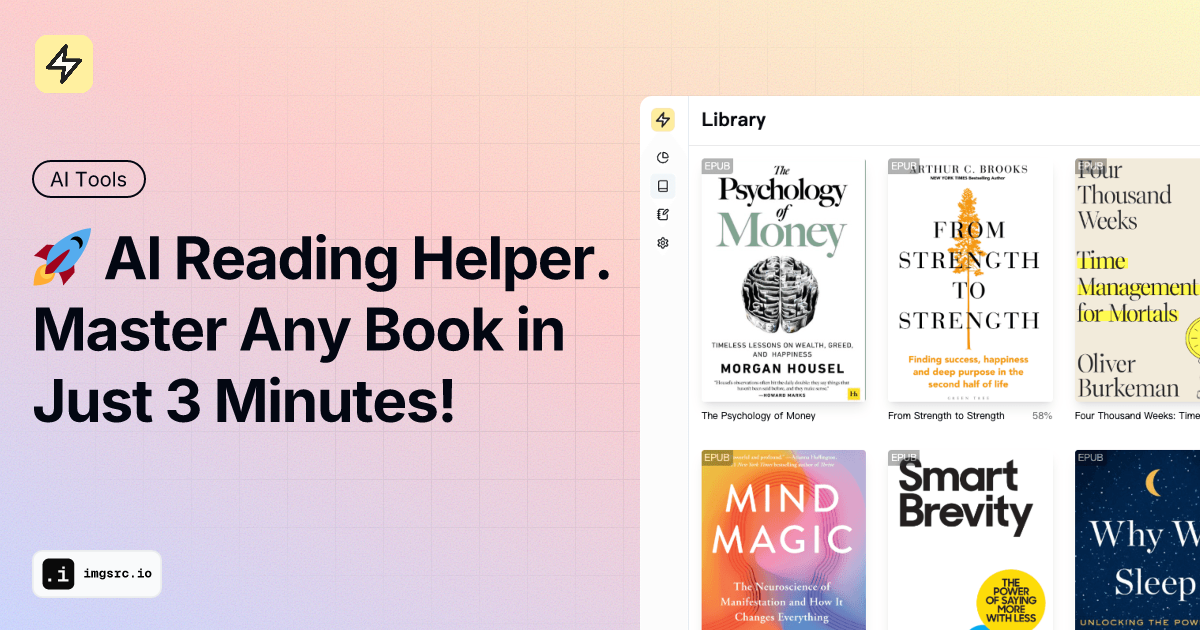
In this guide, we compare the best options by speed, pricing logic, summary depth, and how well they support real reading workflows. If you want to turn books into practical notes instead of just scrolling quick lessons, 3MinTop book summarizer stands out for a more flexible workflow.
Why people search for a Headway alternative
Most people do not leave Headway because the app is unusable. They leave because their reading goals evolve.
At first, short motivational summaries can feel efficient. They help you browse ideas quickly and maintain momentum when your schedule is tight. But after a while, a few limits start to matter:
- The summary depth may feel too light for complex nonfiction.
- Audio-first or mobile-first design may not help if you work from EPUB or PDF files.
- You may want study notes, highlights, or reusable outputs rather than one-time consumption.
- Pricing feels harder to justify if the summaries do not connect to your actual reading workflow.
This is especially true for readers who are trying to build a long-term system. Maybe you want to read more books without wasting time. Maybe you are comparing tools before committing to a paid app. Maybe you already use detailed book pages such as Atomic Habits summary or Individual Breakthrough summary and want a tool that helps you generate that kind of structured takeaway from your own files.
In other words, the search for a Headway alternative is often really a search for a better outcome:
- faster understanding
- stronger retention
- better note quality
- smoother EPUB and PDF handling
- clearer value for the money
What actually matters when comparing alternatives
If you only compare app store screenshots, most tools in this category look similar. To make a useful choice, you need a tighter framework.
1. Summary depth
Some apps focus on very short, highly compressed takeaways. That is fine for browsing. It is weaker for books built on layered arguments, case studies, or frameworks. If you read for work, research, or personal systems, deeper summaries usually matter more than sheer speed.
2. Input format flexibility
This is where many tools diverge sharply. Some summarize only books already in their own catalog. Others let you upload files directly. If you work with EPUBs, PDFs, reports, or exported notes, that difference is not cosmetic. It changes whether the product fits your actual life.
3. Note usefulness
A summary is only valuable if you can do something with it later. Strong tools help you extract ideas, review them again, and connect them to ongoing projects. Weak tools create passive consumption that feels productive in the moment but rarely compounds.
4. Speed to insight
Fast is good, but shallow fast is overrated. The goal is not to finish a summary in three minutes if you still need twenty more minutes to reconstruct the argument yourself. The best tools reduce time without flattening meaning.
5. Pricing logic
The right question is not "Which app is cheapest?" The right question is "Which app gives enough value per reading session that I would keep using it three months from now?" A slightly more capable tool is often cheaper in practice if it replaces other steps in your workflow.
Quick recommendation
If your main goal is casual motivation and short-form self-improvement browsing, Headway can still be fine.
If you want a true headway app alternative for practical reading workflows, split the decision this way:
- Choose Blinkist if you want a mature summary catalog and a familiar mainstream experience.
- Choose 12min if you want ultra-short, simple summaries and prefer minimal depth.
- Choose 3MinTop if you want a tool that handles EPUB and PDF inputs, produces practical outputs, and fits a note-driven reading workflow.
That last category matters more than it used to. Readers increasingly want to bring their own material, not just browse a closed library. If that is your use case, best AI book summarizers for EPUB and PDF is a better lens than the old "summary app" comparison alone.
Best Headway alternatives in 2026
1. 3MinTop
3MinTop is the strongest choice for readers who want more than short summary snippets. Its core advantage is workflow flexibility. Instead of limiting you to a closed catalog, it is designed around turning long-form reading into usable notes and summaries, especially from EPUB and PDF files.
That matters if your source material is not already packaged into an app library. It also matters if your goal is output, not just input.
Strengths
- Supports EPUB and PDF oriented workflows
- Better fit for extracting actionable notes
- Useful for readers who want summaries from their own materials
- Works well for moving from reading to retention and application
Weaknesses
- Less familiar than legacy consumer summary brands
- Best value shows up when you actively use file-based workflows
Best for
- professionals reading for decision-making
- students turning books into review notes
- readers building a personal knowledge system
- anyone who wants a
book summary app alternativewith stronger utility
If you already know you want file upload support and output you can reuse, 3MinTop is the most practical recommendation in this list. It fits the direction modern reading tools are moving toward rather than staying locked in the old subscription-summary model.
2. Blinkist
Blinkist remains one of the most recognizable names in this space. It offers a broad nonfiction library, a clean interface, and an established audio-plus-text experience.
For readers who mostly want curated book takeaways from a known library, it is still a credible option. The tradeoff is that it can feel closer to a polished content subscription than a flexible reading workflow tool.
Strengths
- Large brand recognition and broad library
- Easy onboarding
- Good for casual summary browsing
Weaknesses
- Less flexible for user-provided EPUB and PDF content
- Can feel generic if you want deeper notes and outputs
Best for
- readers who want a familiar mainstream summary app
- users comparing legacy platforms side by side
If you are deciding between category leaders, 12min vs Blinkist vs 3MinTop is the more direct comparison.
3. 12min
12min positions itself around ultra-short nonfiction summaries. That is its appeal and also its limitation.
If your standard is "give me the broad idea fast," it can work. If your standard is "help me understand the argument, pull out the useful framework, and keep the notes," it often feels too compressed.
Strengths
- Fast, simple, low-friction format
- Easy to sample many titles quickly
Weaknesses
- Very short format can reduce nuance
- Less effective for serious knowledge retention
- Not the best choice if you want more robust file workflows
Best for
- readers who prioritize speed over depth
- users sampling many titles at a surface level
4. Shortform
Shortform is different from Headway in an important way: it generally leans toward more detailed guides rather than highly compressed summaries. That makes it attractive for readers who want interpretation, context, and practical exercises.
Strengths
- More depth than typical bite-sized summary apps
- Useful for readers who want structured learning support
Weaknesses
- Can feel heavier if you mainly want quick scanning
- Not always ideal for people who just want fast extraction from their own files
Best for
- readers willing to trade speed for depth
- learners who want more explanation around key ideas
5. Reader-oriented AI summarizers
This is not one single product category, but it is increasingly relevant. Newer AI summarization tools focus less on library subscriptions and more on helping you upload, summarize, and organize your own reading material.
For many people, this is the real replacement path. They are not asking for "another Headway." They are asking for something more useful than Headway.
That is why category comparisons now overlap with workflow searches such as AI summarization, EPUB note extraction, and PDF reading assistants. If that sounds like your situation, the best Headway alternative may not come from the older summary-app market at all.
Comparison table
| Tool | Best for | Summary depth | EPUB/PDF workflow | Output usefulness |
|---|---|---|---|---|
| 3MinTop | Practical reading workflows | Strong | Strong | Strong |
| Blinkist | Mainstream summary browsing | Medium | Limited | Medium |
| 12min | Ultra-fast sampling | Light | Limited | Light |
| Shortform | Deeper guided learning | Strong | Limited | Medium to strong |
| AI summarizers | Bring-your-own-material reading | Varies | Usually strong | Varies to strong |
How 3MinTop fits EPUB, PDF, and summary workflows
The main reason 3MinTop works well as a headway alternative is that it is oriented around the full job a reader wants done.
That job is usually not just "show me a short summary."
It is:
- get the key ideas quickly
- keep the useful structure
- turn the result into notes
- decide what to read fully, revisit, or apply
Headway is strongest at the first step. 3MinTop covers more of the full chain.
For example, if you upload a long EPUB or PDF, you are not limited to browsing a prebuilt catalog. You can work from the actual material you need to understand. That is a better fit for students, researchers, consultants, operators, and serious nonfiction readers.
It also pairs well with a broader reading system:
- Use the summary to decide whether a book deserves a full read.
- Pull out action items and frameworks.
- Link insights back to previous notes or topic pages.
- Return to summary pages on the blog hub when you want curated examples or comparisons through the blog.
That combination of flexibility and output quality is what makes 3MinTop more than a surface-level competitor. It is closer to a reading workflow tool than a pure summary library.
Which alternative is right for you
Here is the simplest decision rule.
Choose Headway if:
- you mainly want motivational, snackable summaries
- you care more about browsing than note-taking
- you are comfortable with a lighter-depth experience
Choose Blinkist if:
- you want a recognized library product
- you like polished text and audio summaries
- you do not need strong support for your own uploaded reading files
Choose 12min if:
- you want the fastest possible overview
- you are comfortable losing depth and nuance
Choose Shortform if:
- you want more context and learning support
- you are willing to spend more time per title
Choose 3MinTop if:
- you want the best Headway alternative for practical reading output
- you need EPUB or PDF support
- you want to turn summaries into notes you can actually use
- you prefer a workflow that helps retention instead of passive consumption
FAQ
What is the best Headway alternative in 2026?
For readers who want faster book summaries plus practical EPUB and PDF workflows, 3MinTop is the strongest overall Headway alternative. For readers who only want a mainstream library experience, Blinkist remains a solid option.
Is Blinkist better than Headway?
It depends on what you value. Blinkist is often better if you want an established summary library and a polished, familiar interface. Headway can appeal to readers who prefer highly compressed motivational content. Neither is ideal if you mainly need file-based workflows.
Is there a free Headway alternative?
There are free and freemium AI summarization tools, but the real question is whether they produce useful outputs. A free tool that creates weak summaries usually costs more in time later. It is better to judge alternatives by workflow quality, summary depth, and whether they support the file types you actually read.
What should I look for in a book summary app alternative?
Focus on summary depth, EPUB or PDF support, note usefulness, and whether the app helps you apply ideas later. Those factors matter more than branding or the number of titles in a library.
Can I use AI instead of traditional summary apps?
Yes. For many readers, AI-based tools are now the better path because they can summarize your own materials instead of limiting you to a closed catalog. That is especially useful for PDFs, EPUBs, reports, and study documents.
Final verdict
If you want short inspiration and light consumption, Headway still has a place.
If you want a real headway alternative that helps you process books faster, keep stronger notes, and work directly from EPUB or PDF files, 3MinTop is the better fit in 2026.
The category is shifting away from passive summary subscriptions and toward practical reading workflows. Readers want to upload material, extract insights, and keep outputs they can reuse. That is exactly where 3MinTop has the clearest advantage.
Try 3MinTop book summarizer to upload a book, summarize EPUB or PDF files, and turn long reading into notes you can actually use.